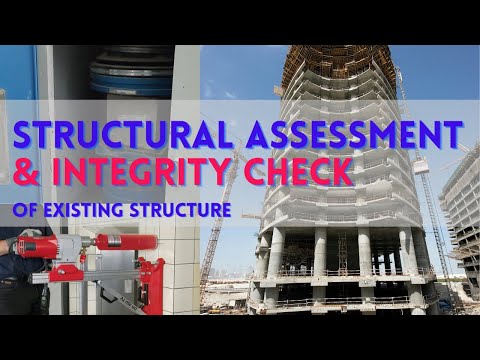
Identifying the early warning signs of a compromised building can mean the difference between a simple repair and a catastrophic collapse. This guide breaks down the exact indicators engineers use to evaluate commercial properties before minor stress fractures become life-threatening hazards.
Understanding Load Paths and Structural Integrity
Every commercial building operates as a dynamic system designed to transfer weight safely to the ground. When that system is interrupted, structural failure begins. Maintaining
structural integrity means a building can support its designed load—including its own weight, occupants, and environmental forces—without breaking or deforming excessively.
Property owners often confuse harmless settling with dangerous load-bearing failure. Knowing how to spot structural failure in commercial buildings requires distinguishing between surface-level wear and deep mechanical stress. Cosmetic flaws include hairline cracks in drywall or minor paint peeling. Structural distress, on the other hand, manifests as stair-step cracks in masonry, sagging rooflines, or doors that suddenly refuse to close because the doorframe has warped under immense pressure.
Primary Indicators of Impending Structural Failure
1. Foundation Shifting and Concrete Spalling
The foundation is the anchor of any commercial property. When concrete begins to spall—flaking or breaking away to expose the steel rebar underneath—moisture has penetrated the core. Rusting rebar expands up to seven times its original thickness, literally blowing the concrete apart from the inside out. If you see chunks of concrete falling from support columns in a parking garage or basement, the load-bearing capacity of that column is actively degrading.
2. Deflection in Beams and Sagging Floors
Gravity is relentless. If horizontal support beams lose their capacity, you will notice a visible sag or "deflection" in the floors above. If you walk across a commercial floor and notice a distinct slope or a trampoline effect, the joists or steel beams below are likely compromised. This often happens when commercial spaces are repurposed—such as turning a standard office into a heavy data center—without reinforcing the floor structure to handle the new weight.
3. Unexplained Gaps and Pest Infiltration
When a building shifts violently, framing pulls away from windows and doors. These gaps compromise the building envelope, destroying energy efficiency and inviting infestations. If you are dealing with sudden pest issues—and wondering if
that mouse in your apartment: could it give you hantavirus?—the root cause might actually be a failing foundation wall that gave the rodents a highway inside. Fixing the pest problem requires fixing the structural breach first.
Advanced Diagnostic Techniques
The Role of the Human Inspector vs. Automated Systems
Modern engineering relies heavily on tilt-meters, laser levels, and strain gauges to monitor building movement. Some property managers even use drone photogrammetry to map exterior cracks. While automated sensors are becoming standard—causing some junior inspectors to figure out
how to cope with AI job replacement anxiety—the human eye remains irreplaceable for interpreting nuanced environmental context. An algorithm might flag a crack, but an experienced engineer understands the soil composition and historical load changes that caused it.
Analytical Comparison: Material Failure Modes
Different materials fail in entirely different ways. Understanding these patterns helps inspectors predict how much time they have before a total collapse.
| Material |
Early Warning Signs |
Ultimate Failure Mode |
Time to Collapse |
| Steel |
Rusting, buckling, twisting |
Yielding and plastic deformation |
Often gradual, but rapid under extreme heat |
| Concrete |
Spalling, diagonal shear cracks |
Brittle fracture |
Sudden, with little warning once rebar fails |
| Timber |
Rot, termite damage, splitting |
Splintering and crushing |
Gradual, accompanied by audible groaning |
Regulatory Standards and Safety Protocols
When a commercial building exhibits severe signs of distress, immediate action is required by law. The
Occupational Safety and Health Administration (OSHA) mandates strict protocols for structural collapse hazards, particularly during construction or renovation phases. Employers must evacuate the premises and secure the perimeter if load-bearing elements show signs of buckling or instability.
Additionally, the
American Society of Civil Engineers (ASCE) provides rigorous frameworks for evaluating existing structures. ASCE 7 outlines the minimum design loads for buildings, and engineers use these exact baselines to determine if a structure has been overloaded by snow, wind, or unauthorized rooftop equipment. Ignoring these standards places both the property and human lives at severe risk.
Step-by-Step Action Plan for Property Managers
If you suspect your building is failing, follow this immediate protocol:
1.
Document Everything: Take high-resolution photos of any new cracks, noting the date and exact location. Place a ruler next to the crack for scale.
2.
Monitor for Active Movement: Tape a piece of glass or install a specialized crack monitor over the fissure. If the glass breaks or the monitor expands, the building is actively shifting.
3.
Consult a Structural Engineer: Never rely on a general contractor to diagnose load-bearing issues. Hire a licensed structural engineer to perform a comprehensive load path analysis and recommend permanent shoring solutions.
 Newscow