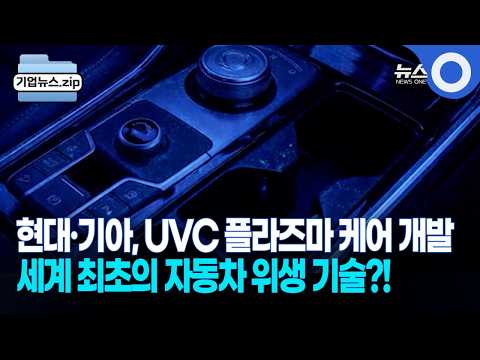
Hyundai Motor Company and Kia Corporation today unveiled Plasma Care UVC, a first-of-its-kind in-vehicle sanitization technology utilizing Far-UVC light to continuously eradicate pathogens while passengers remain inside the cabin. The immediate deployment of this plasma-based system signals a critical operational shift happening right now for the autonomous fleet and ride-sharing sectors, directly targeting the labor costs and downtime associated with manual vehicle detailing.
The Mechanics of Far-UVC Integration
Unlike conventional ultraviolet sterilization systems that rely on 255-280 nanometer LED sources—which cause severe ocular and dermal damage upon human exposure—the Plasma Care UVC system operates strictly within the 200-230 nanometer spectrum. Engineering data released today confirms the shortwave Far-UVC light penetrates the cellular DNA of bacteria and viruses without breaching the outermost keratin layer of human skin.
Testing conducted by the
Korea Testing Laboratory (KTL) in an 8-cubic-meter simulated cabin environment recorded a 96.8 percent reduction in airborne viruses within 30 minutes. Concurrent clinical evaluations executed alongside Seoul National University demonstrated a 99.9 percent eradication of pneumococcal bacteria within 60 seconds of exposure.
Financial Implications for Fleet Operations
The introduction of continuous, passenger-safe sanitization fundamentally alters the unit economics of commercial mobility. Ride-sharing networks and emerging robotaxi fleets currently absorb significant financial losses due to vehicle downtime required for chemical cleaning between passenger transit cycles. By integrating a miniaturized plasma lamp system directly into the vehicle architecture, fleet operators can achieve near-100 percent utilization rates.
This technological pivot creates immediate market losers. Chemical sanitization suppliers and manual detailing contractors face severe demand contraction. As automotive manufacturers engineer human labor out of the maintenance loop, the displacement of service workers accelerates, mirroring the aggressive corporate restructuring seen as
Oracle cuts 21,000 jobs over AI. The elimination of manual cleaning protocols represents a hidden financial incentive for fleet managers prioritizing automated operational efficiency over traditional service contracts.
Hardware Miniaturization and Durability
To transition Far-UVC technology from static environments like hospitals to dynamic automotive applications, Hyundai engineers redesigned the plasma lamp infrastructure. Official specifications from the
Hyundai Motor Group Newsroom detail the integration of specialized optical filters that block all wavelengths outside the Far-UVC spectrum. The hardware is structurally reinforced to withstand continuous vehicular vibration and extreme temperature fluctuations.
Real-world deployment testing utilizing the Kia PV5 platform at the Korea Automobile Testing and Research Institute verified a 99.9 percent elimination of E. coli within 40 minutes of operation. The system simultaneously neutralizes odor-causing microorganisms, further reducing the need for secondary chemical deodorizers in commercial transit vehicles.

 Newscow