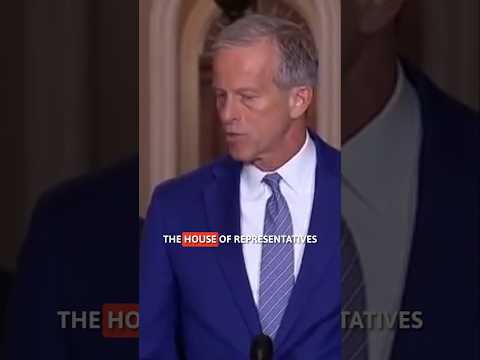
Right now, following a historic 50-48 vote in the upper chamber today, the nation is urgently asking how does a senate war powers resolution legally stop war with Iran. This breaking development sets the stage for an unprecedented constitutional showdown over military authority, and we are breaking down the exact legal mechanics that mainstream outlets are completely missing.
Breaking News: The Senate's Historic Vote Today
In a stunning legislative strike delivered over the last 24 hours, the U.S. Senate passed a measure directing the Commander in Chief to halt all military hostilities against Iran. Four Republican senators crossed party lines to secure the 50-48 victory. While diplomats scramble at the Bürgenstock resort in Switzerland to salvage a fragile peace dialogue, this vote threatens to upend the administration's entire negotiation strategy.
The resolution, which already cleared the House earlier this month, demands the immediate withdrawal of U.S. Armed Forces from the conflict zone unless Congress formally declares war or enacts a specific Authorization for Use of Military Force (AUMF).
The Constitutional Framework: Article I vs. Article II
To understand the gravity of today's vote, you have to look at the inherent friction built into the U.S. Constitution. Article I grants Congress the exclusive power to declare war and fund the military. Article II designates the President as the Commander in Chief of the armed forces.
Following the Vietnam War, Congress passed the War Powers Resolution of 1973 to prevent presidents from launching prolonged military campaigns without legislative approval. Section 5(c) of this act specifically allows Congress to force the removal of troops engaged in foreign hostilities.
What Other Outlets Missed: The Supreme Court Loophole
If you watch the evening news tonight, pundits will likely call this vote "purely symbolic." They assume the President will simply veto the measure, and Congress lacks the two-thirds majority required to override it. However, they are missing a massive legal loophole.
Lawmakers drafted this specific legislation as a Concurrent Resolution (H.Con.Res.86). Under the original text of the 1973 War Powers Act, a concurrent resolution becomes binding immediately upon passing both chambers—it never goes to the President's desk for a signature. This aggressive maneuver forces a direct constitutional crisis, leading legal scholars to debate can the President veto a Senate resolution blocking military action in Iran when the resolution relies on this pre-1983 framework.
Joint vs. Concurrent Resolutions
The legal mechanics break down into two distinct legislative paths:
- Joint Resolution: Requires passage by both the House and Senate, followed by the President's signature. If vetoed, it requires a heavy two-thirds majority in both chambers to override.
- Concurrent Resolution: Requires passage by both chambers but entirely bypasses the Oval Office. The original War Powers Act used this to give Congress a "legislative veto" over unauthorized wars.
The White House argues this mechanism is invalid, pointing to the landmark 1983 Supreme Court case INS v. Chadha, which ruled legislative vetoes unconstitutional. Congress counters that matters of war and peace operate under different constitutional authorities, setting up a potential Supreme Court battle.
The Real-World Impact on the Ground
While Washington debates constitutional law, the human toll on deployed troops is escalating rapidly. Service members stationed in hastily constructed forward operating bases are dealing with severe sanitation issues and local wildlife. It is a stark reality check when soldiers face the same localized health anxieties as a civilian wondering if that mouse in your apartment could give you hantavirus, all while operating under the daily threat of incoming artillery and drone strikes.
The passage of this resolution sends a definitive signal to global markets and foreign allies. As reported by international news agencies, the uncertainty surrounding U.S. military authority is already impacting oil prices and complicating the ongoing peace talks in Switzerland.
Next Steps in the Legal Showdown
The administration now faces a difficult choice. They can ignore the concurrent resolution, citing the Chadha precedent, and risk Congress pulling all military funding. Alternatively, they can comply and immediately begin withdrawing forces from the region.
Over the next 48 hours, expect intense legal filings and emergency hearings as both branches of government fight for ultimate control over the nation's military footprint.